

Before you start shopping for a good used Jeep, ask yourself how you'll actually drive it. A Wrangler, a Grand Cherokee, and a Compass all wear the Jeep badge, but they suit very different lives. This guide covers the strengths and watch-outs of each, plus what to inspect before you sign anything. When you're ready to look, browse our pre-owned inventory at Keene CDJR in Jarrettsville.
Good Jeep Models to Buy Used: Quick Picks for Harford County Drivers
Match the Jeep to the way you’ll drive it. The Wrangler is the pick for open-air driving and trail capability, while the Grand Cherokee leans toward comfort, utility and towing. Buyers who want a smaller, more efficient everyday SUV should look at a Compass or Cherokee.
Whichever model you choose, maintenance records and mechanical condition matter more than model year alone. Set a total ownership budget that covers insurance, fuel, tires, maintenance and possible repairs, and check our latest used car specials for current savings on pre-owned Jeeps and more.
Why Harford County Drivers Choose Pre-Owned Jeeps
Late-model used Jeeps can offer many features and capabilities of new ones at a substantial saving, though savings vary with age, condition, and market demand. Mileage and maintenance history matter alongside model year.
Jeep ownership involves trade-offs between everyday refinement and specialized capability. Decide whether your priority is commuting comfort, family space, outdoor recreation, or a mix. A well-maintained vehicle with useful equipment often beats a higher-trim model with an uncertain service history.
Commuting on Route 165 and MD-23
If Route 165 or MD-23 is part of your daily drive, use the test drive to judge ride comfort, steering response, braking confidence, visibility, and cabin noise at the speeds you actually travel. Check that seat support, climate control, smartphone connectivity, and driver-assistance equipment work properly; the trim name guarantees nothing.
Weigh fuel use alongside purchase price, especially when comparing a trail-oriented Wrangler with a smaller crossover. For many shoppers, the best Jeep for everyday use is the one that feels easiest on a normal weekday.
Rural Northern Maryland Roads and Four-Wheel-Drive Confidence
On rural northern Maryland roads, match traction equipment and ground clearance to your real needs. Jeeps differ in capability. Confirm whether the vehicle has four-wheel drive, which modes it offers, and whether the system needs driver engagement.
Four-wheel drive helps with traction when accelerating, but you still need good tires, cautious speeds, and plenty of room to brake. If you're curious about Wrangler snow mode or similar settings, ask how that specific vehicle's system works and confirm it during a test drive.
Top Used Jeep Models to Consider
The four models below are the most practical places to start for most used buyers. Compare them using the same criteria: condition, service history, passenger and cargo needs, comfort, capability, and ownership costs. No model year is universally reliable, so generation, engine, transmission, maintenance, and past use all count.
The table summarizes each model by recent generation, so you can compare across the model years you’ll find on used lots.
| Model (recent generations) | Key specs | Capability | Watch-outs | Best for |
|---|---|---|---|---|
| Wrangler (JK: 2007–2018; JL: 2018–present) | Two- and four-door; four-door adds passenger and cargo space; JL adds a more modern cabin and tech | Removable doors and top; strong off-road ability | Firm ride, higher fuel use, fewer comfort amenities than family SUVs | Weekend trail drivers |
| Grand Cherokee (WK2: 2011–2021) | Midsize; 3.6L V6 standard, with V8, diesel and high-performance options in various years | Four-wheel-drive versions deliver signature Jeep capability | Trims and powertrains vary widely by year, so confirm the exact vehicle | Growing families and towing |
| Compass (2017–present) | Compact; seats five; four-cylinder engine | Front-wheel drive or available four-wheel drive, with upgraded off-road systems on higher trims | Trade-offs in on-road comfort and refinement | Daily commuters |
| Cherokee (2014–2023) | Compact; four-cylinder or V6, with a nine-speed automatic | Available four-wheel drive and capable off-road trims | Confirm drivetrain on the specific vehicle | Commuters wanting extra capability |
Jeep Wrangler (JK and JL Generations): Open-Air Freedom and Trail Capability
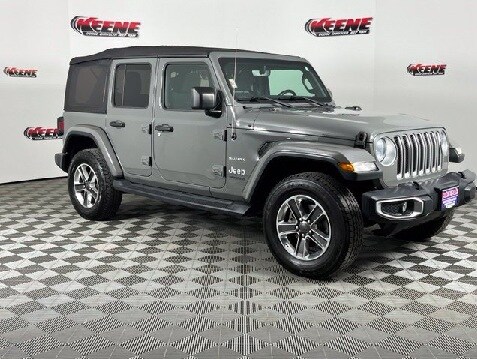
The Wrangler is built for weekend trail drivers. Every generation offers removable doors and top, strong off-road ability, and two- or four-door layouts, with the four-door adding passenger and cargo space. The trade-off is a firmer ride, higher fuel use and fewer comfort amenities than a family-focused SUV.
The JK generation covers the 2007 to 2018 model years, and the redesigned JL arrived for 2018, bringing a more refined cabin, updated technology and new powertrain options. Because both were sold for 2018, confirm the generation on any listing from that year, and compare refinement, cabin layout and technology directly when shopping across the two.
Inspect the roof panels and soft-top parts for damage, and look over door seals and interior surfaces for water intrusion. Lifts and oversized tires deserve a close inspection before you count them as upgrades, and so do aftermarket drivetrain parts. Pay only for off-road gear you'll use.
Jeep Grand Cherokee (WK2): Family Comfort and Towing Capability
The WK2-generation Grand Cherokee, sold from the 2011 to 2021 model years, suits growing families who want comfort, utility and towing capability. It’s a midsize SUV with a standard 3.6-liter V6, and depending on the year and trim, you’ll also find V8 options, an EcoDiesel turbodiesel V6 and high-performance SRT and Trackhawk models. Four-wheel-drive versions deliver the model’s signature Jeep performance.
Because trims and powertrains vary widely, confirm the exact vehicle. Check rear-seat comfort and cargo access against your household's needs, and see how the ride and convenience features hold up. If you plan to tow, confirm towing specs for the exact engine, drivetrain, and equipment. Neither the model name nor a hitch tells you much about suitability.
Jeep Compass and Cherokee: Efficient Daily Drivers
The current-generation Compass, sold since the 2017 model year, is a compact five-seater with a four-cylinder engine. Earlier model years offered front-wheel drive or available four-wheel drive with a choice of manual and automatic transmissions, while later years moved to a turbocharged engine and updated technology. Higher trims add upgraded off-road systems and larger touchscreens with Apple CarPlay and Android Auto. It trades some on-road comfort and refinement for capability, so judge it on daily usability.
The Cherokee, sold from the 2014 to 2023 model years, pairs four-cylinder or V6 engines with a nine-speed automatic, and later model years added a turbocharged four-cylinder. With available four-wheel drive and capable Trailhawk trims, it offers more off-road ability than most compact rivals, and it’s a lower-cost way into a used Jeep. Don't assume these two share the same interior space or drivetrain. On a test drive, assess acceleration, shifting, parking visibility, rear-seat room, and cargo flexibility.
Which Jeep Fits You?
-
Daily commuter: Compass or Cherokee, ideally a four-wheel-drive Cherokee.
-
Weekend trail driver: Wrangler.
-
Growing family: Grand Cherokee.
-
Towing a small trailer: confirm towing specs for the exact vehicle before you decide.
Maryland Seasons, Road Salt and Your Jeep Choice
Road salt can contribute to corrosion of metal motor vehicles, and road salt and ice-melting products can accelerate rust on the undercarriage. For any Jeep that has seen winter treatments, underbody condition deserves close attention. Corrosion can affect structural parts, brake lines, and suspension mounts, and it can eat away at fasteners too.
The frame, suspension components, and wheel wells collect salt and grime, so have a trusted mechanic examine the vehicle on a lift. Check tire tread depth, age, and damage too, because four-wheel drive can't make up for worn tires. Test the heating, defrosting, and air conditioning, then run the wipers and lights. On removable-roof models, inspect seals and drainage areas for leaks or trapped moisture.
What to Inspect Before Buying a Used Jeep
Arrange an independent pre-purchase inspection that covers the engine, transmission, steering, suspension, brakes, electronics, and fluid leaks. Include a cold start and a thorough test drive, watching for warning lights, noises, vibration, overheating, inconsistent shifting, or unstable handling. Compare visible wear with the odometer and records, since mileage alone doesn't establish condition. Our Mopar-certified service center in Jarrettsville can help, and you can schedule service online.
4x4 System Maintenance and Drivetrain Checks
A professional should handle the actual diagnosis, but a few things are worth spotting yourself:
-
All four tires should match, with even treadwear side to side.
-
Cupped wear can signal a steering, suspension, or brake problem.
-
Listen for driveline noise when engaging 4x4.
-
Look for leaks and damaged boots, and note any signs of hard use.
Have a qualified technician verify four-wheel-drive operation, and compare records against the manufacturer's maintenance schedule.
Frame Integrity and Rust Inspection
Surface rust differs from structural rust, and frame rust can become a safety issue. Check wheel wells and door bottoms for rust, and look for blistered paint. On a Wrangler, ask a professional to inspect the frame. On unibody Jeeps, ask them to check structural underbody areas, including mounting points.
Look for frame scaling or underbody repairs, and investigate fresh coatings, uneven paint, or repair marks rather than assuming they're harmless. Check interior and exterior for rust or off-road damage. If corrosion or collision repairs leave you unsure, get a professional assessment.
Service History, Vehicle Records and Recalls
Ask for service records and repair receipts, and confirm service matched the manufacturer's schedule for that model. A vehicle history report may show accidents or flood damage but usually not mechanical problems. It can also miss unreported accidents or repairs, so physical inspection is essential. CARFAX reports are available on qualifying vehicles in our preowned inventory and include prior ownership, service records, and reported incidents.
Get an independent mechanic's inspection even on certified or warrantied vehicles. Ask for a written report with a cost estimate for necessary repairs, including the make, model, and VIN.
Then check recalls by VIN. NHTSA's lookup shows unrepaired recalls only. It doesn't show already-repaired recalls, some recently announced recalls before all VINs are identified, or recalls more than 15 years old unless the manufacturer offers more coverage. The 17-character VIN sits on the lower-left windshield and the registration card.
Certified Pre-Owned vs. Standard Used Jeeps
Jeep's Certified Pre-Owned program puts every certified vehicle through a 125-point inspection by a trained Jeep technician. The check includes wheels, undercarriage, engine, steering, and paint. Each vehicle comes with a CARFAX Vehicle History Report and 24/7 roadside assistance, and CPO warranty coverage transfers to a later owner. Vehicles that don't pass aren't eligible to be offered as CPO.
Manufacturer-backed certification differs from a dealer's own inspection or warranty, so compare coverage duration, mileage limits, deductibles, and exclusions. Dealers must display an FTC Buyers Guide in every used car, stating whether it's sold "as is" or with a warranty and what percentage of repair costs the dealer pays. A standard used Jeep can still be a smart buy when condition, records, and inspection results line up. Certification doesn't replace a test drive. Keene CDJR in Jarrettsville carries CPO vehicles too, so contact us for current details.
Why Shop Used Jeeps at Keene CDJR in Jarrettsville
Keene Dodge Chrysler Jeep Ram is a full-service Chrysler, Dodge, Jeep, and Ram dealership at 3707 Norrisville Road, Jarrettsville, MD. A few things set the experience apart:
-
A curated pre-owned selection to compare.
-
An on-site financing department.
-
A Mopar-certified service center.
-
One-stop shopping, financing, and service.
We also serve local business owners seeking work-ready vehicles.
Browse Pre-Owned Jeep Inventory or Schedule a Test Drive Today
Shortlist vehicles by budget, intended use, passenger space, drivetrain, and must-have features. Before you visit, confirm that the vehicle is still available, then check its mileage, equipment, and certification status. Make the test drive a real evaluation of comfort, visibility, braking, steering, and technology. Request service records, recall status, and permission for an independent inspection before deciding.
Ready to find the best used Jeep for your routine? Start by looking through our current pre-owned listings, call us at 410-983-6765 to schedule a test drive or explore financing, or reach out through our contact form. Keene CDJR in Jarrettsville is happy to help you find a Jeep that fits.