

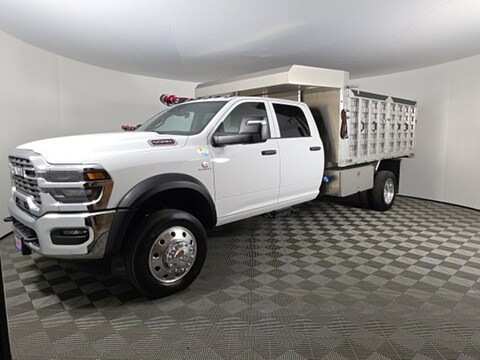
Buying a used work truck starts with the job you need it to do, whatever badge is on the tailgate. Pick a truck that fits your loads and your budget and it pays for itself. Pick the wrong one and you'll feel it in downtime. This is the checklist we'd hand any Harford County contractor or fleet manager, and you can start by browsing our pre-owned inventory at Keene CDJR in Jarrettsville.
Define the Job First: Match a Used Work Truck to Your Workload
Start with the work. List daily duties like crew transport, equipment hauling, trailer towing, and jobsite access. Separate routine demands from occasional peak loads. Too little truck slows you down, and far too much adds fuel, insurance, and tire costs. Set an operating budget next to your purchase budget, covering preventive maintenance, near-term repairs, and possible downtime.
Check Payload, Towing Capacity, and GVWR
Payload and towing ratings are separate limits, so you can't add them together. Passengers, tools, cargo, installed equipment, and trailer tongue weight all count against payload. RAM's guidance is that GAWR, GVWR, and GCWR should never be exceeded, and that weights can change with product audits or changes.
A model name alone doesn't tell you capacity. Engine, axle ratio, drivetrain, cab, and bed all change it. Confirm ratings on the specific truck's door-jamb label and documentation. Heavier tires or suspension add-ons don't automatically raise the manufacturer's ratings.
A quick mini-guide to match your job to your truck:
-
Towing equipment: Compare the trailer's loaded weight and tongue weight to the truck's verified ratings and hitch.
-
Hauling materials: Add up the heaviest regular load plus tools and crew, then compare it to payload.
-
Crew transport: Prioritize seating and secure storage, then confirm the bed fits your gear.
Choose Cab, Bed, Drivetrain, and Engine for Daily Use
Match seating to your crew, then confirm the bed holds what you carry every day. Longer beds and bigger cabs trade away maneuverability and jobsite parking. Choose 4x4 only when terrain and traction justify it, since it adds parts to maintain. When weighing gas against diesel, look at workload, service needs, and repair exposure along with torque. Check that any hitch, trailer brake controller, and bed protection works.
Why Buy Pre-Owned: Used vs. New for Harford County Businesses
Many owners ask, "is it worth buying a new truck?" That depends on your numbers. A used truck can lower acquisition cost and preserve capital. The saving is only potential, and it holds only if condition, capacity, maintenance history, and inspection findings support it.
Total ownership cost tells you more than sticker price. Count financing, insurance, fuel, service, and tires, then add repairs and downtime. Ask about warranty coverage, whether manufacturer or extended, because a new purchase may offer more predictable early maintenance. Newer model years or lower mileage aren't automatic signs of better value.
Fleet and Commercially Used Trucks: What to Expect
If you plan to buy a used commercial vehicle, expect some commercially used trucks in the mix. Whether fleet use history helps or hurts depends on the truck in front of you. Ask what it carried, how often it towed, where it ran, and how much it idled. Compare the seller's story with the wear you see.
Benefits of Ex-Fleet and Lease-Return Trucks
Fleet trucks can come with scheduled maintenance, documented repairs, and a traceable service history. That's the appeal if you're buying commercial vehicles for your own crew. Judge each truck's records on their own, since fleets differ. Lease-return status tells you about ownership and nothing about condition. Installed commercial equipment can save setup cost if it's properly installed and serviceable.
Risks of Heavy Use and Why Maintenance Beats Mileage
Towing, heavy cargo, rough ground, and long idling cause wear the odometer doesn't show. Documented maintenance matters more than mileage, and prior application matters too. Look for service that matched demanding conditions, especially transmission, cooling, axle, and transfer-case work.
-
Engine and idle hours: Review them alongside mileage when available.
-
Mounted equipment: Check hour meters on compressors, welders, and generators, because low mileage can hide equipment wear.
-
Budget: Plan for wear items and deferred maintenance.
Have questions about a specific truck's past? Get in touch with us before you visit.
Review History and Maintenance Records Before You Visit
Request the VIN, history report, and maintenance records before you drive over, along with the title information. If something is missing, treat it as an open question. A gap proves nothing either way about how the truck was treated.
Vehicle History Reports, VIN Checks, and Title Brands
Match the VIN on the truck to the title, listing, and paperwork. Stop if anything doesn't line up. A history report may show ownership, accidents, repairs, and salvage status. NMVTIS-approved providers supply title, insurance-loss, and salvage information. These reports can omit parts of a state's full title record, and brand terms like "junk," "salvage," and "flood" vary by state.
Maryland MVA defines a salvage vehicle as one damaged and declared a total loss by an insurer. A rebuilt vehicle is a salvage vehicle repaired and inspected so it can be titled and registered. A rebuilt title doesn't erase salvage history. A clean report is no substitute for an independent inspection.
Flood clues include:
-
Musty odors.
-
Damp or mismatched carpet.
-
Rust around doors or under the dashboard.
-
Mud or silt under seats.
-
Brittle wiring.
-
Moisture in lights or the instrument panel.
Service Logs, Recalls, and Road Salt Corrosion
Review maintenance records for regular oil service and major repairs, plus transmission, differential, cooling, and brake work. The NHTSA VIN lookup shows unrepaired recalls for vehicles from certain manufacturers. It doesn't show recalls already repaired, some recently announced recalls, or recalls more than 15 years old unless a manufacturer offers more coverage. Ask for proof of completed recall work.
Maryland winters mean salted roads, and salt damages bodies and components. Look underneath for frame and brake-line corrosion, and tell light surface oxidation from scaling or weakened mounts.
Inspect the Truck: Frame, Bed, Engine, and Transmission
Have a qualified mechanic assess the engine, transmission, suspension, brakes, and electrical systems. Combine visual checks, diagnostic scans, records, and the road test, because none works alone. Be wary of modifications such as altered wiring or emissions tampering.
Frame, Suspension, Bed Wear, and Hitch
Use this checklist on the walkaround:
-
Check the frame and underbody, especially wheel wells and suspension mounts.
-
Light surface rust differs from pitting or flaky, soft rust, which may signal structural compromise.
-
Look at bed wear, tailgate operation, and hitch wear.
-
Snowplow mounts suggest hard use.
-
Check body panels and paint for damage or mismatched repairs.
-
Question fresh coatings that hide bare metal.
Engine and Transmission Performance Under Heavy Loads
Research the exact year, engine, and transmission combination, since brand reputation can't replace drivetrain-specific facts. Watch a cold start if you can. Then check:
-
Engine leaks, battery corrosion, and frayed belts or hoses.
-
A diagnostic report, which you should ask for.
-
Transmission fluid that is red, not burnt or sparkly.
-
Leaks at the transmission pan or differentials.
-
Smooth shifting without hesitation or slipping.
Put a repair cost on each finding. Don't wave off symptoms as normal for a work truck.
Test Drive and Spot the Red Flags
Drive a varied route with traffic, highway speed, uneven pavement, and parking maneuvers. Note shifting, braking response, ride quality, vibration, and noises. Check tire tread and sidewalls, and confirm lights, technology, and safety equipment work. Test 4x4 only on suitable surfaces and per the manufacturer's instructions.
Tie the drive to your work. Compare the truck's verified ratings to your typical load and hitch needs. Red flags include:
-
A bumpy ride.
-
Dips while braking.
-
Leaks, which you should recheck after the drive.
-
Shaking.
Walk away if a seller refuses an independent inspection, can't resolve paperwork gaps, or pressures you.
Proven Pre-Owned Workhorses: RAM 1500 and RAM Heavy Duty
RAM 1500 and RAM Heavy Duty suit different workloads. A RAM 1500 makes sense when its verified payload and towing fit your loads and you value maneuverability. RAM Heavy Duty becomes worth it once sustained hauling or towing justifies the added capability and ownership costs. Condition decides how a truck holds up, so apply the same inspection standards to both.
The table below shows recent model-year examples, and used trucks vary by year and configuration. These figures are 2026 examples and don't apply to older trucks.
| Row | RAM 1500 | RAM Heavy Duty (2500/3500) |
|---|---|---|
| Engines | 3.6L Pentastar V6 with eTorque, 3.0L Hurricane, 3.0L Hurricane High-Output, 5.7L HEMI V8 | 6.4L HEMI V8, 6.7L Cummins High-Output turbo diesel (430 hp, 1,075 lb-ft) |
| Drivetrain | 4x2 and 4x4 | 4x2 and 4x4 |
| Cab/bed | Quad Cab with 6' 4" bed, Crew Cab with 5' 7" bed, Crew Cab with 6' 4" bed | Regular Cab, Crew Cab, Mega Cab, with 8-foot and 6' 4" beds |
| Max towing / payload by engine | 3.6L: 8,130 lb / 2,360 lb. 3.0L Hurricane: 11,610 lb / 1,930 lb. 3.0L High-Output: 10,000 lb / 1,490 lb | 2500: gas 17,740 / 3,930, High-Output diesel 20,000 / 3,600. 3500: gas 18,150 / 7,590, High-Output diesel 36,610 / 6,050 (max ratings; each requires a specific cab, bed, axle and GVWR configuration) |
| Towing tech | Trailer Hitch Assist, Trailer Reverse Guidance with Dynamic Gridlines, Digital Rearview Mirror with Tow Mode, Integrated Trailer Health Monitor, power telescoping trailer tow mirrors | Available Fifth-Wheel/Gooseneck Tow Prep Group. Available Trailer Reverse Steering Control and trailer tire-pressure monitoring on 2500 and 3500 |
Transmission pairings vary by engine and year, so confirm them on the specific truck. Verify ratings by VIN and configuration.
Why Keene CDJR in Jarrettsville Is Your Commercial Truck Hub
Keene CDJR in Jarrettsville is a full-service Chrysler, Dodge, Jeep, and Ram dealership specializing in retail and commercial vehicles. At 3707 Norrisville Road, Keene CDJR in Jarrettsville's commercial truck center brings together:
-
A pre-owned selection and a commercial division offering heavy-duty RAM fleet solutions, ProMaster vans, upfitting guidance, and business tax incentive support.
-
An on-site financing department that works with customers across all credit profiles.
-
A Mopar-certified service center.
If you want to buy a van or work truck for the business, our commercial vehicle options are a good place to start. Ask about history reports, warranty terms, and permission for an independent inspection on any truck. You should expect clear paperwork with every purchase.
Negotiating, Financing, and Closing the Deal
Keep it practical:
-
Research values with independent valuation guides, and compare similar local trucks.
-
Base your offer on inspection findings, tire condition, and repair estimates.
-
Get an independent inspection.
-
Review history, records, and warranty coverage before signing.
-
Request a written out-the-door price listing taxes, fees, and add-ons.
-
Confirm title transfer, insurance, and registration before delivery.
Our on-site financing department can walk you through options. Compare financing by total cost, since the monthly payment alone can mislead.
Bring proof of insurance and your trade-in details. If you're buying for a company, bring your business paperwork too.
Browse Pre-Owned Trucks or Schedule a Test Drive Today
You now have the checklist: define the job, verify ratings, review the history, inspect, and drive. From here, browse our pre-owned trucks, pick a few candidates, and bring your crew, cargo, and trailer requirements. Call us at 410-983-6765. Sales hours are Mon-Thu 9 AM to 8 PM, Fri 9 AM to 6 PM, and Sat 9 AM to 5 PM. Keene CDJR in Jarrettsville is ready to help you find the right fit.